Big Ideas &
Civic Education
We must say… this is a great place to start! Check out these conversations on the big ideas behind American democracy, where they came from, and how we can exercise our power and impact as citizens to carry them forward.
Featured Episode — Start Here!
We discuss why the courts alone can’t protect our democracy, the myth of a “hopelessly divided country,” and the steps everyday people can take to reclaim their power, fight for freedom, and reimagine democracy.
We discuss the foundational lies of the Lost Cause, the organic nature of more recent lies, and the constant vigilance necessary to defend democracy.
We discuss the concept of deliberative representative democracy by ordinary citizens, which means representing and being represented in turn.
We discuss the role of schools to form effective citizens in our democracy. It’s necessary to prioritize the teaching of our history and our government.
We discuss the dangers of book bans and censorship, the power of civic action on the local level, and the intersection of libraries and human rights.
We discuss deliberative polling as a way to assess the will of the people and then to make it consequential. This is what democracy is all about.
We discuss the history of citizenship schools, their profound importance in the Civil Rights Movement, and the critical lessons they offer for our present moment with Elaine Weiss.
We discuss the influence of Karl Marx in American politics and the continued relevance of Marxism today.
We discuss the power and the promise of public schools, the universal rejection of book bans by parents across the country, and an inclusive vision for democracy.
Danielle Allen is the author of Justice By Means of Democracy. She is also the James Bryant Conant University Professor at Harvard University and Director of the Allen Lab for Democracy Renovation at Harvard Kennedy School's Ash Center for Democratic Governance and Innovation. We discuss power sharing liberalism as a new paradigm in the practice of democracy.
Bernard E. Harcourt is Isidor and Seville Sulzbacher Professor of Law and Professor of Political Science at Columbia University -- and he was also our very first guest on the podcast! Bernard's most recent book, Cooperation: A Political, Economic, and Social Theory, offers the blueprint for a society based on cooperation.
Landon Mascareñaz and Doannie Tran are co-authors of The Open System: Redesigning Education and Reigniting Democracy. Education is our greatest democracy-building endeavor. We discuss rebuilding trust in public education and marshaling the public will to do something great together.
Dr. Richard Haass is the President of the Council on Foreign Relations and the author of The Bill of Obligations: Ten Habits of Good Citizens. We discuss how we, as citizens, can fulfill our role in the social contract.
David Priess is the Director of Intelligence at Bedrock Learning and has served at the CIA as an intelligence officer, a manager, and a daily intelligence briefer during the presidencies of Bill Clinton and George W. Bush. We discuss how the issues of waging war and negotiating peace affect our everyday lives.
Jennifer Berkshire and Jack Schneider are co-authors of A Wolf at the Schoolhouse Door: The Dismantling of Public Education and the Future of School and co-hosts of the education podcast Have You Heard? We discuss the ideology behind the unmaking of public education and the dangers of losing one our most prized public goods.
Andrew Koppelman is the author of Burning Down the House: How Libertarian Philosophy Was Corrupted by Delusion and Greed. It’s a fascinating history of this idea and an excellent lens for understanding so much of American life and politics.
Jonathan Friedman is the director of free expression and education programs at PEN America. He oversees research, advocacy, and education related to academic freedom, educational gag orders, book bans, and general free expression in schools, colleges, and universities. We discuss the driving forces behind campaigns to ban books and silence teachers.
Ian Bremmer is a political scientist and he’s the founder and president of the research and consulting firm Eurasia Group. We discuss his latest book, The Power of Crisis: How Three Threats -- and Our Response -- Will Change the World. He argues that the major challenges humanity is facing are spurring us to create a new world order that works against these common threats.
Christopher Beem is Managing Director of the McCourtney Institute for Democracy, co-host of the Democracy Works podcast, and the author of The Seven Democratic Virtues: What You Can Do to Overcome Tribalism and Save Our Democracy. We discuss vices and virtues in the context of democratic thinking, democratic acting, and democratic belief.
Marie Yovanovitch is the former Ambassador to Ukraine and best-selling author of her memoir, Lessons from the Edge. In a live event for Big Tent USA, we discuss the powers of diplomacy, the corrosive effects of corruption, and the war in Ukraine.
Reverend Dr. Emma Jordan-Simpson is the President of Auburn Seminary, a leadership development and research institute that equips bold and resilient leaders of faith and moral courage to build communities, bridge divides, pursue justice, and heal the world. We discuss the role of faith in the social contract and in creating the beloved community.
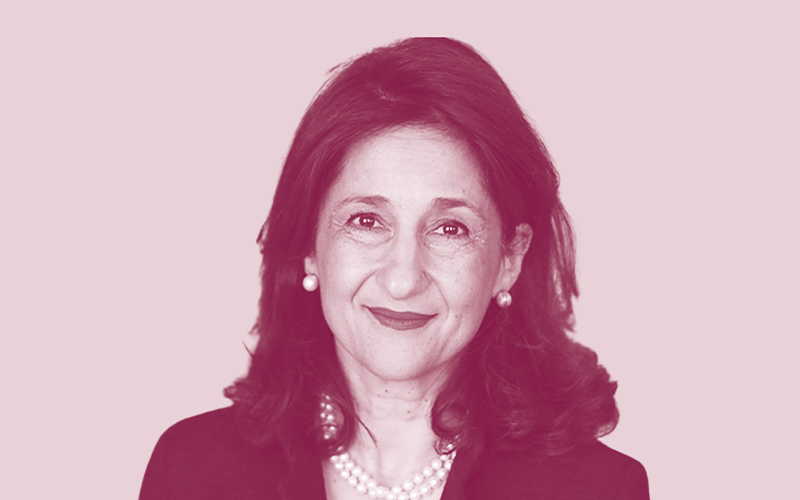
Minouche Shafik is the Director of the London School of Economics and the author of What We Owe Each Other: A New Social Contract. We unpack her ideas around investing in the architecture of opportunity as well as the notions of reciprocity, risk-sharing, and mutual benefit in growing our economies.
Melissa Lane is the Director of the University Center for Human Values and politics professor at Princeton University. Her work focuses on the history of political thought and political philosophy. We discuss the origins of social contract theory, it’s evolution, and examine how it works today.
Séverine Autesserre is an award-winning peacebuilder and author of The Frontlines of Peace: An Insider's Guide to Changing the World. We learn the crucial importance of bottom-up peacebuilding, the current dominance of the top-down approach, and the ideal model that effectively relies on both.